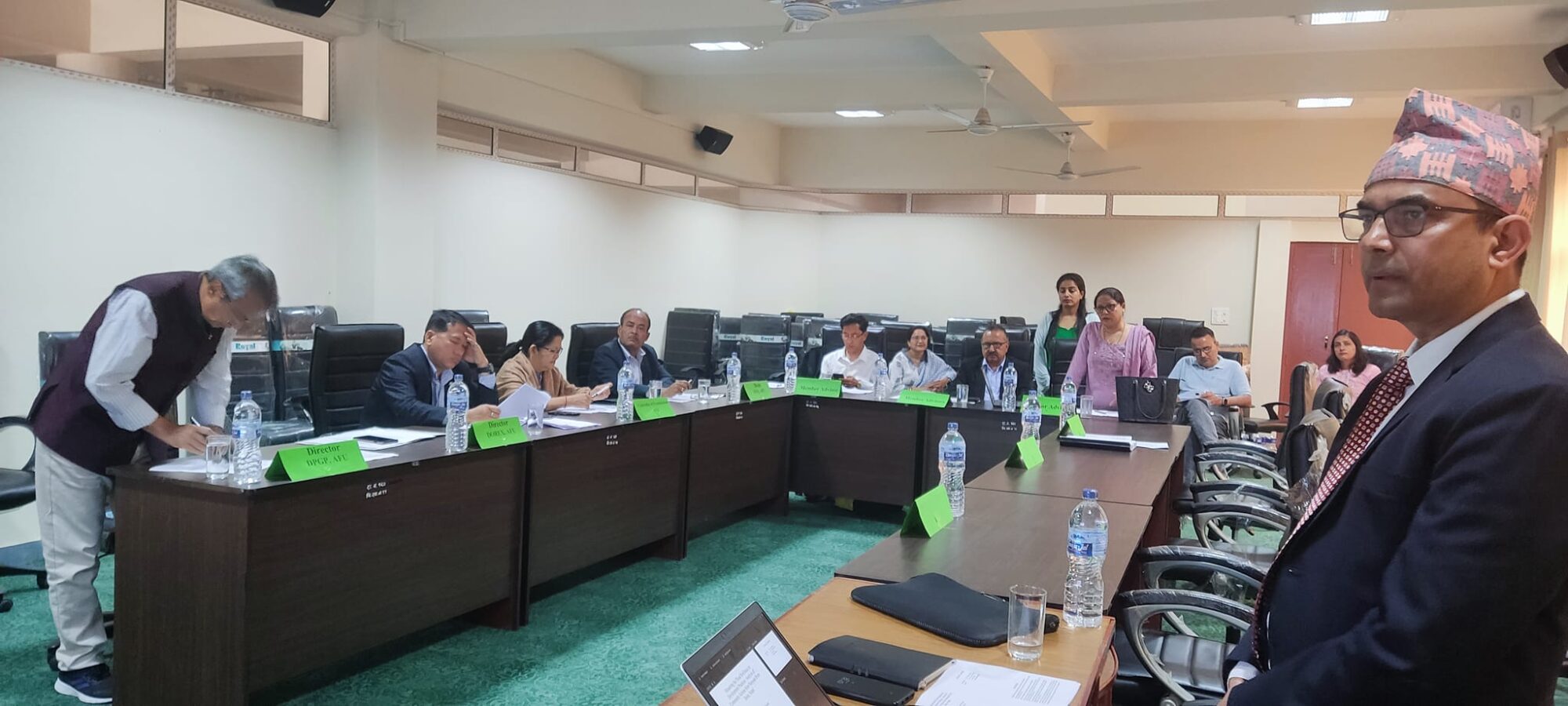
In the face of increasingly frequent and severe flooding events, building resilience has become a crucial endeavor for communities worldwide. Rural Nepal, situated in the flood-prone Narayani river basin, presents a compelling case for understanding the factors that contribute to flood resilience and the strategies that can be employed to enhance it.
My PhD research, titled “Measuring flood resilience in development practices: analysis of community actions in Narayani river basin Nepal,” delved into this critical area of inquiry. Over a 5.5-year period, I conducted field studies in two communities within the Susta Rural Municipalities of Nawalparasi-Bardghat (Susta) west district, employing a mixed-methods research design to gather and analyze data.
The study’s objectives were threefold: to identify factors associated with flood resilience, to document rural strategies and actions, and to provide a recommendation-based review of existing disaster risk reduction (DRR) plans and policies.
The research findings revealed a complex interplay of factors contributing to flood resilience. These factors can be broadly categorized as livelihoods capitals, resilience properties, resilience themes, the DRR cycle, and resilience sources.
Livelihood capitals encompass the assets and resources that communities possess, such as human, natural, social, physical, and financial capital. These capitals play a vital role in enabling communities to cope with and recover from floods.
Resilience properties, on the other hand, represent the characteristics that make communities resistant to the impacts of floods. These properties include adaptability, self-organization, preparedness, mitigation, response, and recovery capabilities.
Resilience themes highlight the interconnectedness of various aspects of community life and their influence on flood resilience. These themes include disaster preparedness, early warning systems, community empowerment, and knowledge sharing.
The DRR cycle emphasizes the importance of a continuous process of planning, implementation, monitoring, and evaluation for effective flood risk reduction.
Finally, resilience sources refer to the external support systems and resources available to communities, such as government agencies, non-profit organizations, and international aid institutions.
The research also demonstrated the significance of community actions and rural strategies in enhancing flood resilience. These strategies encompass a wide range of measures, from constructing flood-resilient infrastructure to adopting flood-resistant agricultural practices and fostering community-based disaster preparedness initiatives.
To be truly flood-resilient, communities must not only survive floods but also thrive in the face of these challenges. This requires building adaptive social behaviors, strengthening social capital, ensuring timely dissemination of early warnings, and effectively implementing DRR plans and policies at the community level.
Flood resilience extends beyond mere survival; it entails succeeding and even deriving benefits from the stressor. While flooding cannot be entirely prevented, its impacts can be mitigated and reduced by adhering to resilience principles, embracing adequate preparation, and actively engaging community members in rural strategies.
The lessons learned from this research underscore the importance of a holistic approach to flood resilience, one that recognizes the interconnectedness of various factors and the crucial role of community-based actions. By empowering communities to build their resilience, we can foster a more sustainable and disaster-resilient future.
All your supporting arguments must be communicated with simplicity and charm. And in such a way that the reader will read on. (After all, that’s a reader’s job: to read, isn’t it?) And by the time your readers have reached this point in the finished copy, you will have convinced them that you not only respect their intelligence, but you also understand their needs as consumers.
This is some dummy copy. You’re not really supposed to read this dummy copy, it is just a place holder for people who need some type to visualize what the actual copy might look like if it were real content.
In today’s competitive market environment, the body copy of your entry must lead the reader through a series of disarmingly simple thoughts.
If you want to read, I might suggest a good book, perhaps Hemingway or Melville. That’s why they call it, the dummy copy.